
Known for
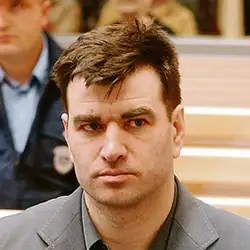
Captain Dragan is known as the founder and commander of the Serb paramilitary unit known as the Kninjas during the war in Croatia, and for the years-long legal battle over his extradition from Australia and his final conviction by Croatian courts for war crimes committed in Knin and Glina.
12 min read
Table of Contents
- Who Is Dragan Vasiljković (Captain Dragan)
- Early Life and Childhood
- Education
- Military Career Before the War in Yugoslavia
- Arrival in Krajina and the Founding of the Kninjas
- Involvement in the Fighting, 1991–1993
- Conflict with Milan Babić and Political Involvement
- Return to Belgrade and Testimony in The Hague
- Indictment, Arrest, and the Long Fight Against Extradition
- Trial and Final Conviction for War Crimes
- Release and Return to Serbia
- Personal Life
- Trivia
- Awards and Recognition
- Legacy and Influence
- Biography – Frequently Asked Questions
- Conclusion
Who Is Dragan Vasiljković (Captain Dragan)
Dragan Vasiljković, better known by his nickname Captain Dragan, is a former Serbian military instructor and commander of a paramilitary unit known as the Kninjas, active during the war in Croatia in the early 1990s. He was born on December 12, 1954, in Belgrade, and spent most of his youth in Australia, where he emigrated with his family as a child. He entered Serbian public life in 1991, when he appeared on the front line in Krajina and took charge of training and leading volunteer and paramilitary forces. Croatian prosecutors later charged Dragan Vasiljković with war crimes against captured soldiers, police officers, and civilians, and after a lengthy legal battle over his extradition from Australia, he was finally sentenced to 13.5 years in prison. He now lives in Serbia.Early Life and Childhood
Dragan Vasiljković was born in Belgrade in 1954. According to available sources, his father, Živorad Vasiljković, was killed in a traffic accident when Dragan was only three years old, leaving his mother, Zorica (née Makuljević), to raise the children alone. Some sources note that he spent a period in foster care while his mother struggled financially in postwar Belgrade.In 1967, at the age of thirteen, Dragan emigrated with his mother, brother, and sisters from Yugoslavia and settled in Perth, Australia. There the family obtained Australian citizenship, and the young Dragan, adapting to his new surroundings, changed his name to Daniel Snedden — the name he would continue to use decades later, including during the period he spent evading authorities.Education
Dragan Vasiljković began his primary education in Belgrade and completed his secondary schooling in Australia, where the family adjusted to a new language and culture. According to some Croatian media reports, the young Vasiljković faced allegations in Melbourne linked to running an illegal business, after which he was reportedly given a choice between prison and military service. This detail cannot be independently confirmed from multiple sources and should be treated with caution.What is confirmed is that Vasiljković joined the Australian Army Reserve, where he trained with the 1st Royal Victoria Regiment in Melbourne and completed officer training. This military background laid the foundation for his later career as a military instructor.Military Career Before the War in Yugoslavia
During the 1980s, Dragan Vasiljković reportedly worked as a military instructor in several African countries and the Middle East, gaining experience he would later apply to training paramilitary formations in Krajina. During this period he also became acquainted with certain military and security circles that, according to media reports, later helped him establish contacts with Yugoslav security structures.In the late 1980s, Vasiljković reportedly attempted several business ventures related to yachting and aviation, none of which succeeded. In the mid-1980s he also began traveling to the Balkans, where he established the contacts that would later shape his wartime role.Arrival in Krajina and the Founding of the Kninjas
As political tensions in Yugoslavia escalated in the late 1980s and early 1990s, Dragan Vasiljković returned to the Balkans. In May 1990 he was in Belgrade at the time Croatia held its first multi-party elections. Soon after, he met Saša Medaković, one of the organizers of the so-called "Log Revolution" in Krajina, and then traveled to Krajina itself, where he met Milan Martić, then the police chief in Knin, whom the International Criminal Tribunal for the former Yugoslavia later convicted of war crimes.Vasiljković reportedly concluded that the defense of the local Serb population in Krajina was poorly organized and began helping train volunteers. In Golubić near Knin, he established a military training center for members of the rebel Serb forces. This training gave rise to the unit he himself named the Kninjas — a name meant to evoke the combat skills of Japanese ninja warriors combined with the resolve of the people of Knin. This unit later became the core of the so-called Red Berets, whose formation and arming, according to media reports, was also linked to Frenki Simatović, then a member of Serbia's State Security Service.Involvement in the Fighting, 1991–1993
During 1991, Dragan Vasiljković, together with units he had trained, took part in armed clashes at several locations in Croatia, including fighting near Gospić, as well as combat operations in the Banija and Kordun regions in July of that year. It is from this period that the charges later brought against him originated — Croatian prosecutors accused him of taking part in the torture, abuse, and killing of captured Croatian soldiers and police officers at the Knin fortress prison during June and July 1991.The indictment also charged him with devising, in July 1991, together with the commander of a Yugoslav People's Army tank unit, a plan to attack the police station in Glina and the surrounding settlements of Jukinac, Gornji Viduševac, and Donji Viduševac. According to the indictment, the attack damaged and destroyed civilian property, forced Croatian residents to flee, involved looting, and led to civilian deaths and injuries, including that of a foreign journalist.In early 1993, following the Croatian military operation known as Maslenica, Vasiljković returned to Knin and established a new training center called Alfa Camp. He led a combat group that took part in the fighting for Škabrnja in an attempt to counter Croatian advances. He was also charged over abuses and killings of prisoners allegedly committed in February 1993 in the village of Bruška near Benkovac, although he was later acquitted of this charge for lack of sufficient evidence.Conflict with Milan Babić and Political Involvement
In Krajina, Dragan Vasiljković was closely aligned with Milan Martić, while he publicly described the president of the self-proclaimed Republic of Serbian Krajina, Milan Babić, as dishonest. In November 1991, according to Vojislav Šešelj's later account, Babić summoned the then-leader of the Serbian Radical Party to Knin, believing that Captain Dragan was preparing a mutiny within the military ranks. According to Šešelj, Vasiljković organized a rally of military personnel at the time, though the attempt to remove Babić ultimately failed.In December 1992, Vasiljković ran for president of Serbia, winning 1.86 percent of the vote and finishing fourth. During the war, he also founded a humanitarian fund bearing his nickname, aimed at helping civilian war victims, which led part of the Serbian public to view him as a folk hero at the time.Return to Belgrade and Testimony in The Hague
After the fighting ended, Dragan Vasiljković returned to Belgrade. In 2001 he was reportedly involved in events connected to the removal of Slobodan Milošević from power. He later testified at Milošević's trial before the International Criminal Tribunal for the former Yugoslavia in The Hague, where he declined the immunity offered by the prosecution. The tribunal stated at the time that there was no incriminating evidence or formal charges against Captain Dragan at that point, although a tribunal spokesperson later said an earlier investigation into him had been discontinued once the tribunal's mandate expired.In late 2004, Vasiljković returned to Australia, where he resumed living under the name Daniel Snedden, opened a golf course and golf school, and settled in Perth, attempting to return to a quiet family life.Indictment, Arrest, and the Long Fight Against Extradition
Croatian prosecutors filed an indictment against Dragan Vasiljković in 2005 for war crimes, after which Interpol issued a warrant for his arrest. In January 2006 he was arrested in Australia, where he remained in extradition custody, with a brief interruption between 2009 and 2010 when the Federal Court temporarily rejected Croatia's extradition request. In March 2010, however, the High Court of Australia ruled to allow his extradition, after which Vasiljković went into hiding for 43 days until his arrest in Perth in May 2010.During this time in hiding, Vasiljković stayed on the property of Nada Lukić-Brus, the woman who would soon become his wife, before moving to the coastal town of Yamba in New South Wales, where he was located after Australian police intercepted a phone call he made to Frenki Simatović, former commander of Serbia's State Security special forces.The Australian government made a final decision to extradite Captain Dragan to Croatia in November 2012, after his defense spent years attempting to challenge the request, including a 2013 appeal in which Vasiljković claimed he had faced an unfair process in violation of the Geneva Convention. That ruling was later overturned by the federal court. After exhausting thirteen appeals before Australian courts, Vasiljković was finally extradited to Croatia on July 8, 2015.Trial and Final Conviction for War Crimes
Dragan Vasiljković's trial before the County Court in Split began in September 2016, with dozens of witnesses questioned during the proceedings. Throughout the trial, Vasiljković denied any wrongdoing, claiming he had only been defending his homeland and that witnesses against him had given false testimony. In September 2017, the court found him guilty at first instance and sentenced him to 15 years in prison for war crimes committed against Croatian soldiers and civilians in Knin and Glina in 1991.Following the appeals process, his sentence was finally reduced to 13.5 years in prison. The court found that Vasiljković, as commander of the Special Purposes Unit and head of the Alfa training center, acted in violation of the Geneva Convention — that he took part in the torture, abuse, and killing of captured Croatian soldiers and police officers at the Knin fortress prison, and that he organized the attack on the police station in Glina and surrounding villages, during which civilians were also killed. He was acquitted of the charges related to the 1993 crimes in Bruška due to insufficient evidence.His final sentence took into account nearly twelve years he had already spent in extradition custody in Australia and pretrial detention in Croatia. He served his sentence at the Lepoglava prison.Release and Return to Serbia
Dragan Vasiljković was released from Lepoglava prison in late March 2020, having served most of his sentence. He was simultaneously banned from entering or residing in the European Union for twenty years, and was immediately deported to Serbia via the Bajakovo border crossing. As his release coincided with the COVID-19 pandemic, he spent a mandatory quarantine period upon arriving in Serbia.Since returning, Vasiljković has repeatedly spoken publicly about his case, denying guilt and claiming he was unjustly convicted. His lawyers have continued pursuing legal action before the United Nations Human Rights Committee, challenging the length of his extradition detention in Australia and the proceedings against him.Personal Life
Dragan Vasiljković has been married twice. While hiding from Australian police in 2010, he married Nada Lukić-Brus, the daughter of one of his wartime comrades from Krajina, in a secret ceremony held while he awaited a decision on his extradition. Nada had three children from a previous marriage and regularly visited him during his time in Australian custody, also testifying in court proceedings related to his extradition.After returning to Serbia, Vasiljković entered a relationship, and later a marriage, with Marija Bojović, daughter of the late Vuk Bojović, longtime director of the Belgrade Zoo and, according to Vasiljković, his best friend. Vasiljković is twenty-four years older than his wife. The couple lives on Avala, where, according to Vasiljković, they also care for animals, including a tame wolf.In 2025, Vasiljković publicly disclosed that he had suffered a heart attack, his third, after which he had several additional stents implanted. He later told the media he had recovered and was moving forward, thanking his doctors and the public for their support.Trivia
- Dragan Vasiljković lived in Australia for decades under the name Daniel Snedden, which he also used on official documents.
- He personally coined the name "Kninjas," inspired by the city of Knin and the martial art of ninjutsu.
- Before the war, he reportedly worked as a military instructor in Africa and the Middle East.
- His extradition case from Australia to Croatia lasted nearly a decade and was one of the longest extradition proceedings in Australian legal history.
- He ran for president of Serbia in 1992, despite not having been previously known as a political figure.
Awards and Recognition
There is no public record of Dragan Vasiljković receiving official state honors or awards. Part of the Serbian public regarded him as a folk hero during the war, though this was never accompanied by formal recognition from any institution.Legacy and Influence
Dragan Vasiljković remains one of the most controversial figures of the 1990s war in Croatia. For part of the Serbian public, he represented a symbol of resistance and military discipline amid the chaos of war, while Croatian courts and the international community regard him as someone finally convicted of war crimes. His extradition case from Australia is often cited as an example of a lengthy and complex legal process in international criminal cooperation, and his public statements since his release continue to provoke divided reactions across the Balkans.Biography – Frequently Asked Questions
Who is Captain Dragan?
Captain Dragan is the nickname of Dragan Vasiljković, a former Serbian military instructor and commander of the Kninjas paramilitary unit during the 1990s war in Croatia.When and where was Dragan Vasiljković born?
He was born on December 12, 1954, in Belgrade.Why was Captain Dragan convicted?
He was convicted by the County Court in Split of war crimes committed against captured Croatian soldiers, police officers, and civilians in Knin and Glina in 1991.How many years in prison did Dragan Vasiljković receive?
He was initially sentenced to 15 years in 2017, later reduced on appeal to a final sentence of 13.5 years.Why was he known as Daniel Snedden?
That was the name he used in Australia, where he grew up from the age of thirteen and where he obtained citizenship.How long did his extradition process from Australia take?
The process lasted nearly a decade, from his arrest in 2006 to his final extradition to Croatia in July 2015.Is Dragan Vasiljković still alive?
Yes, he is alive and has lived in Serbia since his release from prison in 2020.Who was Captain Dragan's wife?
He was married to Nada Lukić-Brus, and after returning to Serbia he married Marija Bojović.Did Captain Dragan have any health issues?
In 2025, he publicly announced that he had survived his third heart attack, after which he had several stents implanted.Was Vasiljković involved in politics in Serbia?
He ran for president of Serbia in 1992, though he did not receive significant voter support.Conclusion
Dragan Vasiljković, known by the nickname Captain Dragan, traveled a path from a boy born in Belgrade, through his upbringing and military training in Australia, to becoming one of the key paramilitary commanders on the front lines in Croatia during the 1990s. Founder of the Kninjas unit and a long-time fugitive from justice, he was ultimately extradited to Croatia after one of the longest extradition proceedings in Australian history and finally sentenced to 13.5 years in prison for war crimes. He now lives in Serbia, where he continues to publicly present his version of the wartime events.Related biographies
Last updated: August 28, 2026
Report this biography
If you noticed an error, inappropriate content, or have another reason to report this page, fill in the form below.