
Known for
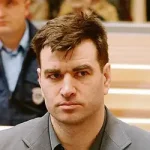
Zvezdan Jovanović is best known as deputy commander of the Special Operations Unit (the Red Berets) and as the man finally convicted as the direct perpetrator of the assassination of Prime Minister Zoran Đinđić. He received the maximum 40-year sentence in 2007, and the verdict was upheld in 2008.
Table of Contents
- Who Is Zvezdan Jovanović
- Early Life and Childhood
- Education
- The Road to the Special Units
- Rise in the Special Operations Unit
- The 2001 JSO Armed Revolt
- The Assassination of Zoran Đinđić
- Arrest and Disbanding of the Unit
- Trial and Verdict
- Serving the Sentence and Public Reactions
- Private Life
- Interesting Facts
- Legacy and Influence
- Biography – Frequently Asked Questions
- Conclusion
Who Is Zvezdan Jovanović
Zvezdan Jovanović (born in Peć, 19 July 1965), known by the nicknames Zveki and Zmija, is a former lieutenant colonel and deputy commander of the Special Operations Unit (JSO) of Serbia’s State Security Service, which the public knows as the Red Berets. He was finally convicted and sentenced to the maximum of 40 years in prison as the direct perpetrator of the assassination of Serbian Prime Minister Zoran Đinđić, carried out on 12 March 2003 in Belgrade.
Little is known about his life before he joined the special units. The most reliable information covers the period from the 1990s to his arrest in 2003, as well as the trial that followed. For that reason, this biography follows what relevant media and the court outcome confirm, and wherever sources differ, this is noted explicitly.
Early Life and Childhood
Zvezdan Jovanović was born on 19 July 1965 in Kosovo and Metohija, then part of the Socialist Federal Republic of Yugoslavia. Sources differ on the exact place of birth. The weekly Vreme and other Serbian media name Peć, while encyclopedic sources name the village of Breznica near Peć.
According to Vreme, the family moved to Čačak about ten years later. Jovanović grew up and went to school there. Information about his parents and other family members is not publicly known, so this biography does not include it.
Education
In Čačak, Jovanović finished primary school and then the secondary Mechanical Engineering School, in 1983. There is no reliable, publicly available information on whether he studied further at a university. It is also not known what military or police training he completed before joining the special units.
The Road to the Special Units
According to his own statement as reported by Vreme, Jovanović joined in 1991 the formation from which the Special Operations Unit would emerge. Some encyclopedic sources state that he first joined the Serb Volunteer Guard of Željko Ražnatović Arkan. Sources differ on this detail, but they agree that he spent his first combat years in paramilitary formations during the wars in the former Yugoslavia.
The common origin of these formations is described by both BBC News in Serbian and Vreme. The core of the later Unit consisted of members of two paramilitary groups: the Serb Volunteer Guard and the Knindže. Jovica Stanišić entrusted its formation in the field to Franko Simatović Frenki, and part of it was also formed by Radovan Stojičić Badža. Vreme describes exactly how Jovanović ended up in this circle as unknown.
During these years he met people who would later be central to his fate. Among them was Milorad Ulemek Legija, the later JSO commander and the organizer of the assassination of Zoran Đinđić.
Rise in the Special Operations Unit
The official Special Operations Unit of the State Security Service was established in 1996, and Milorad Ulemek Legija was appointed its commander. Experienced fighters from earlier paramilitary formations joined it, among them Zvezdan Jovanović. The Unit kept the nickname Red Berets, and its base was in Kula.
War Experience and Position in the Command
According to Vreme, Jovanović took part with the Unit in the fighting in Kosovo and Metohija, before and during the NATO bombing of Serbia in 1999. He later advanced to the rank of lieutenant colonel and the post of assistant, or deputy, commander of the Unit. Sources describe this position differently: some call him an assistant commander, others a deputy commander.
It was reported that he was considered an excellent marksman. His two nicknames followed him throughout his career. Zveki was the nickname from everyday life, while Zmija was the one he acquired during the war period.
The 2001 JSO Armed Revolt
The public first saw Jovanović in November 2001, during the revolt of the Special Operations Unit. The trigger was the arrest of the Banović brothers in Obrenovac, who were accused of war crimes before the Hague Tribunal, in which JSO members took part. They then refused to obey the State Security Service.
Demands and Negotiations
Members of the Unit appeared in full combat gear and blocked part of the Belgrade–Niš motorway near the Sava Centar. They demanded the dismissal of Interior Minister Dušan Mihajlović and of the State Security leadership, as well as the passing of a law on cooperation with the Hague. Negotiations were held at the base in Kula, with Prime Minister Zoran Đinđić, Minister Dušan Mihajlović and Čedomir Jovanović taking part. Sources differ on the exact day the revolt began: both 8 and 9 November are mentioned.
After the revolt, the head of State Security Goran Petrović and his deputy Zoran Mijatović were dismissed. Čedomir Jovanović later stated, in the documentary series Jedinica (The Unit), that during the negotiations in Kula he was lunged at with a knife by Zvezdan, known as Zmija.
The Court Outcome of the Revolt
The prosecution later charged eight members of the Unit with armed rebellion, among them Legija, Zvezdan Jovanović and Dušan Maričić. The courts did not find them guilty. The Court of Appeals concluded that the events of November 2001 were a protest rather than a rebellion. Associates of the murdered prime minister publicly challenged this assessment, and Čedomir Jovanović called the verdict scandalous.
The Assassination of Zoran Đinđić
The murder of Prime Minister Zoran Đinđić remains the gravest political crime in Serbia’s recent history. Zvezdan Jovanović was held responsible for it as the direct perpetrator.
Preparations and Earlier Attempts
In a statement given to the prosecutor and defense counsel, Jovanović said he had been engaged in three attempts and one successful assassination. One of the failed attempts took place in February 2003, when Đinđić avoided serious injury thanks to his security detail. According to the indictment, the assassination was organized by the Unit’s commander Milorad Ulemek Legija together with Zemun Clan leader Dušan Spasojević.
12 March 2003
On 12 March 2003, shortly after 12:20, Đinđić was hit in the courtyard of the Serbian Government building. Jovanović fired a sniper rifle from the Institute for Photogrammetry building at 14 Admirala Geprata Street. The prime minister was taken to the Emergency Center, where he died after surgery. In a police statement given about ten days later, Jovanović said he had not intended to hit Đinđić’s escort and that the escort may have stepped into the path of another bullet.
The government immediately declared a state of emergency, which lasted until 22 April 2003. During the police operation known as Sabre, more than 11,000 people were arrested, including politicians, senior officers and judicial officials.
Arrest and Disbanding of the Unit
Jovanović was arrested on 24 March 2003, according to the Hina news agency and the weekly Vreme. Some sources give 25 March, when the arrest was publicly announced. Prime Minister Zoran Živković announced that a suspect in the direct perpetration of the murder had been detained. Arrested together with him were JSO commander Dušan Maričić Gumar and Saša Pejaković.
On 25 March 2003, the Government of Serbia disbanded the Special Operations Unit. Its members were ordered to hand over their weapons, equipment, uniforms and official identification. This ended the history of a unit that the public had known for years as the Red Berets.
Trial and Verdict
In August 2003, an indictment was issued against 44 people for taking part in organizing the murder, and the trial began on 22 December of the same year before the District Court in Belgrade. The proceedings lasted about four years.
First-Instance Verdict
On 23 May 2007, the Special Court in Belgrade found all twelve defendants guilty. Milorad Ulemek Legija and Zvezdan Jovanović were sentenced to 40 years each, the maximum penalty. Aleksandar Simović, Vladimir Milisavljević, Ninoslav Konstantinović and Sretko Kalinić received 35 years each. Dušan Krsmanović, Miloš Simović, Milan Jurišić, Željko Tojaga and Branislav Bezarević were sentenced to 30 years each, and Saša Pejaković to eight years. In total, 378 years in prison were handed down.
Presiding judge Nata Mesarević found that the murder was political and directed against the state. Serbian President Boris Tadić described the verdict as a turning point for the Serbian judiciary. Parts of the public and some close associates of the murdered prime minister believed that even 40 years was too little.
Appeals and Confirmation of the Verdict
Jovanović appealed the verdict. He claimed that the police statement was not his and that he had signed it under pressure, and in his appeal he called the verdict a judicial error. The Supreme Court of Serbia upheld the first-instance verdict on 29 December 2008, making it final.
The court proceedings never clarified the political background of the assassination. That remained one of the most frequent topics of public debate about the case.
Serving the Sentence and Public Reactions
Jovanović serves his sentence in the Correctional Facility in Požarevac, known as Zabela, in a special section. According to Vreme, he is held in isolated conditions. At the trial for the JSO armed revolt, he declined to present a defense but agreed to answer the questions of other defendants.
The case drew public attention again in 2021, when Dragan Vasiljković, convicted of war crimes, launched a petition for Jovanović’s pardon. The US Embassy in Belgrade publicly questioned why a convicted war criminal had public space to promote the release of a man convicted of murdering the prime minister. According to N1, most of those convicted of the assassination will be released only in 2044 if they serve their full sentences.
Private Life
The private life of Zvezdan Jovanović is not publicly known to the extent that it could be reliably described. Information about his marital status and family has not been confirmed by credible sources, so this biography does not include it. It is also unknown where he lived before his arrest.
All that is known is that he grew up in Čačak, that he serves his sentence in Požarevac, and that he had lawyers representing him in court proceedings. Out of respect for privacy, nothing beyond what is publicly confirmed is stated here.
Interesting Facts
- He has two nicknames: Zveki and Zmija. According to Vreme, the latter resonated more strongly with the public.
- Serbian Radical Party leader Vojislav Šešelj compared the assassination of Đinđić to the assassination of Franz Ferdinand in 2008, saying that Jovanović wanted the same fame as Gavrilo Princip. This was a political comment, not a judicial assessment.
- The events surrounding the assassination were portrayed in the television series Sablja (Sabre), broadcast on RTS in 2024.
- His birthday sparked a political controversy. MP Borko Stefanović reported that Ivan Ristić, head of the Interior Ministry’s Unit for the Protection of Facilities and Persons, had sent a greeting, which the opposition publicly condemned.
- In the Unit he was a close associate of commander Legija, but, according to Vreme, he was not involved in all of his dealings.
Legacy and Influence
The name of Zvezdan Jovanović is permanently tied to the murder of Zoran Đinđić, the first democratically elected prime minister of Serbia after the fall of Slobodan Milošević’s regime. The assassination halted the reform process and raised the question of the state’s relationship with criminalized parts of the security services. After it, the Special Operations Unit was disbanded, and the state launched a crackdown on organized crime.
The verdict confirmed that the crime had a political dimension, but it did not show who stood behind the organizers. For that reason the case is still mentioned in debates about the rule of law, and the anniversaries of the assassination are marked by laying wreaths in the courtyard of the Serbian Government building.
Biography – Frequently Asked Questions
Who is Zvezdan Jovanović?
Zvezdan Jovanović is a former lieutenant colonel and deputy commander of the Special Operations Unit of Serbia’s State Security Service, known as the Red Berets. He was finally convicted as the direct perpetrator of the murder of Prime Minister Zoran Đinđić.
When and where was Zvezdan Jovanović born?
He was born on 19 July 1965 in Kosovo and Metohija. Sources differ: some name Peć, others the village of Breznica near Peć.
Why was Zvezdan Jovanović convicted?
He was convicted of the murder of Serbian Prime Minister Zoran Đinđić, committed on 12 March 2003. The court found him to be the direct perpetrator and Milorad Ulemek Legija the organizer.
How many years in prison was Zvezdan Jovanović sentenced to?
The Special Court sentenced him on 23 May 2007 to 40 years in prison, the maximum penalty. The Supreme Court of Serbia upheld the verdict on 29 December 2008.
Where does Zvezdan Jovanović serve his sentence?
He serves his sentence in the Correctional Facility in Požarevac, known as Zabela, in a special section.
Why is he called Zmija and Zveki?
Zveki is his everyday nickname, and Zmija is the nickname he acquired during the war, according to Vreme. A reliable explanation of the origin of either nickname has not been publicly confirmed.
What position did he hold in the Special Operations Unit?
He was a lieutenant colonel and the assistant, or deputy, commander of the Unit. The commander was Milorad Ulemek Legija, followed by Dušan Maričić.
Who organized the murder of Zoran Đinđić?
According to the verdict, the murder was organized by JSO commander Milorad Ulemek Legija together with members of the Zemun Clan. The political background of the assassination has never been clarified.
Was Zvezdan Jovanović also convicted for the JSO armed revolt?
No. The courts acquitted him of the charges of armed rebellion from November 2001, and the Court of Appeals upheld the assessment that it was a protest.
What happened to the Special Operations Unit?
The Government of Serbia disbanded it on 25 March 2003, immediately after the arrest of Zvezdan Jovanović and Dušan Maričić. Its members handed over their weapons, equipment and uniforms.
Conclusion
Zvezdan Jovanović remains in Serbian history as the man who fired at Prime Minister Zoran Đinđić and was finally sentenced to 40 years in prison for it. His path led from growing up in Čačak, through paramilitary formations and the Red Berets, to the post of deputy commander of the Special Operations Unit. The Unit’s 2001 revolt and the 2003 assassination became symbols of the conflict between the state and criminalized parts of its security services. The verdict established who organized and carried out the murder, but the political background of the crime has never been clarified.
Related biographies
Report this biography
If you noticed an error, inappropriate content, or have another reason to report this page, fill in the form below.