
Known for
Zlata Numanagić is best known for playing Dragana, "the lady with the orange hat," in the cult series "Otpisani," and for the role of Lola Golubović in "Srećni ljudi." A longtime member of the Terazije Theatre, she has played Lila Karamatijević in "Igra sudbine" since 2022.
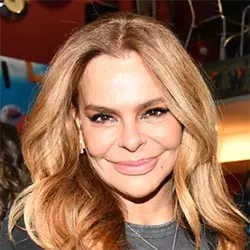
Who is Zlata Numanagić
Zlata Numanagić is a Serbian theatre, film, and television actress, born on November 24, 1950, in Belgrade. She is one of the most recognizable faces of Yugoslav and Serbian acting from the second half of the twentieth century, best known for playing Dragana, "the lady with the orange hat," in the cult series Otpisani. Her career, spanning more than six decades, has covered theatre, film, and television, with the role of Lola Golubović in "Srećni ljudi" standing out among her most memorable performances.
Early Life and Childhood
Zlata Numanagić was born in Belgrade as an only child. She has said her parents were quite strict, precisely because they didn't want her to be spoiled as an only child. She grew up in Dorćol, one of Belgrade's oldest neighborhoods. As a child she tried various sports before her interest turned decisively toward acting. She appeared on television as early as age seven, in the children's show "Milica u zemlji čuda," and by eleven had landed one of the lead roles in the TV film "Uoči odlaska večernjeg voza," directed by Slavoljub Stefanović Ravasi. In 1963 she also took part in the TV film "Kobna pločica" alongside colleagues Ivan Đurđević and Ljuba Kovačević.
She first studied acting in the amateur group of actor Bata Miladinović, and at sixteen began performing at the DADOV Theatre, where she mostly appeared in classical repertoire, building the foundation of her later professional career.
Education
Zlata Numanagić graduated in acting from the Faculty of Dramatic Arts (FDU) in Belgrade. Her path to formal training wasn't straightforward — according to some sources, she wasn't accepted the first time she applied to the then Academy for Theatre, Film, Radio and Television, reportedly because of her voice, so she spent a year working in television before being admitted to a class led by professor Minja Dedić. Her classmates included Irfan Mensur and Danilo Lazović. During her studies she became pregnant at a young age and had to pause for a year, later resuming with a new generation that included Gorica Popović, Jelica Sretenović, and Tanja Bošković — an actress with whom she would, years later, share one of her best-known roles.
Early Career
Although she had already appeared in productions as a child, Zlata Numanagić's professional film career began in the late 1960s. In 1968 she appeared in the films "Delije" and "Kad golubovi polete," and the following year took one of the lead roles in the TV drama "Tristan i Izolda," directed by Vera Belogrlić. That same year she also filmed the TV movie "Kod zelenog papagaja" and the short film "Devojka sa Biokova" with Minja Vojvodić. In this period she built experience mostly through supporting roles in television films and dramas produced by Television Belgrade. She has also said her voice was one of four voices that "launched" the former Belgrade station Radio Studio B.
Rise to Popularity
Zlata Numanagić achieved lasting popularity in 1975 with the series Otpisani, based on the novel by Dragan Marković, directed by Aleksandar Đorđević, with a screenplay by Dragan Marković and Siniša Pavić. In the series, set among a group of young resistance fighters in occupied Belgrade during World War II, she played the young activist Dragana, a character remembered by audiences as "the lady with the orange hat" because of her striking headwear. By her own account, the role was not large — she noted her lines barely filled two pages — but the character's visual identity turned her into one of the show's lasting symbols.
Notably, Dragana was originally meant to be killed off, but due to the show's popularity the character was brought back in the sequel, Povratak otpisanih (1976–1978), where Zlata played the secretary Seka, again recognizable by the same striking hat. She worked again with director Aleksandar Đorđević, whom she described as a strict professional who watched over the cast like an athletic coach, on the 1978 film "Stići pre svitanja," playing the character Vera. In the following years she continued building her career, including a role in "Slom" (1979) and, in the early 1980s, in the Yugoslav-French co-production "The Prize of Peril" (1983), playing Jacqueline.
Greatest Achievements
Zlata Numanagić's most significant later success came with the role of Lola Golubović in the series Srećni ljudi (1993–1996), one of the most-watched Serbian series of the 1990s, following the Golubović family through the years of sanctions and hardship. She took over the role from Tanja Bošković, who had played it in the first roughly twenty-five episodes; where Bošković leaned into the character's sensuality, Numanagić brought more subtlety to the part, and audiences ended up split between the two interpretations.
She went on to appear in the series "Ljubav i mržnja" (2007–2008) and "Moj rođak sa sela," as well as the Italian production "Quo Vadis?," and in films including "U zatvoru" (Women in Prison), "Velika slika" (The Big Picture, 2010) and "Uprkos snijegu" (Despite the Falling Snow, 2016). Since 2022 she has played Lila Karamatijević in the popular series "Igra sudbine," remaining a presence on Serbian television more than five decades into her career.
Alongside film and television, Zlata Numanagić spent decades as one of the mainstays of the Terazije Theatre in Belgrade. She also performed in the cabaret "Dobra stara vremena" and, for nearly a decade, in the play "Memoari Zaze Gabor," about the Hungarian-American actress. Younger audiences particularly embraced her portrayal of Serbian war heroine Milunka Savić in the play "Legija časti – Milunka Savić."
Personal Life
Zlata Numanagić has a son, Fedor, whose birth she has described as the greatest achievement of her life — a pregnancy that forced her to pause her acting studies for a year. She has spoken openly about not having had much luck in love despite her successful career, but has singled out one relationship as especially significant: her first and, in her words, greatest love, Đorđe Tokin. The two fell in love when they were very young, but their paths separated when Đorđe emigrated to the United States in the 1980s. They reunited twenty-five years later, when he briefly returned to Belgrade; she later joined him in Oklahoma, where he was pursuing a doctorate, and the two lived together for about a year and a half. Đorđe fell ill and passed away not long after, and Zlata has said in interviews that she remains grateful to have experienced such a love, even briefly, later in life.
Beyond acting, Zlata Numanagić also ventured into hospitality, opening a restaurant serving Serbian and Mediterranean cuisine in the Albanian coastal town of Saranda together with a friend, Olivera, after a memorable summer holiday there. In later years, she also underwent diaphragm surgery, after which she followed a special diet and lost around ten kilograms.
Trivia
- She was reportedly turned down the first time she applied to the Academy for Theatre, Film, Radio and Television because of her voice, and spent a year working in television before being admitted.
- Her voice was, by her own account, one of four voices that launched the former Belgrade station Radio Studio B.
- Her character in "Otpisani" was originally written to be killed off but was brought back due to the show's popularity.
- She has said she regrets never sharing the screen with actor Rale Milenković, while early in her career she had the chance to perform alongside the legendary comedian Čkalja.
- She played a role in "Memoari Zaze Gabor" for nearly a decade.
- She opened a Serbian-Mediterranean restaurant in Saranda, Albania.
Awards and Recognition
Available sources indicate Zlata Numanagić received recognition for individual roles throughout her long theatre career, though a complete public record of specific awards is not available. Her most enduring recognition remains her long association with the Terazije Theatre, where she has been described as one of the company's foundational actresses, and the lasting place she holds in audiences' memory through her roles in "Otpisani" and "Srećni ljudi."
Legacy and Influence
Zlata Numanagić stands today as one of the few actresses whose career spans several television and theatrical generations — from the partisan dramas of the 1970s, through the family sagas of the 1990s, to contemporary productions like "Igra sudbine." The character of Dragana, "the lady with the orange hat," remains one of the most recognizable visual symbols of "Otpisani," a series that has been rerun in Serbia for decades and holds near-cult status among multiple generations of viewers. As a result, Zlata Numanagić is still regularly featured in the media, half a century after her first role in the series, whenever its anniversaries are marked.
Conclusion
Zlata Numanagić is one of the most recognizable actresses of Serbian and Yugoslav television, with a career now spanning more than six decades. From childhood roles and the character of Dragana in "Otpisani," through Lola Golubović in "Srećni ljudi," to her current role as Lila Karamatijević in "Igra sudbine," she has remained devoted to acting and to the theatre stage, particularly through her long tenure at the Terazije Theatre. Her personal life was marked by the birth of her son Fedor, which she regards as her greatest achievement, and by an extraordinary love story with Đorđe Tokin. Still active today, Zlata Numanagić remains a lasting presence in the memory of Serbian audiences as "the lady with the orange hat" from one of the most-watched Yugoslav series of all time.
Related biographies



Report this biography
If you noticed an error, inappropriate content, or have another reason to report this page, fill in the form below.