
Known for
Vuk Karadžić is best known as the reformer of the Serbian language and orthography and the creator of Vuk’s Cyrillic alphabet, built on the principle “write as you speak.” He published the Serbian Dictionary, collections of folk songs, tales and proverbs, and the New Testament in the vernacular, laying the foundations of the modern Serbian literary language.
Table of Contents
- Who Was Vuk Karadžić
- Origins and Childhood in Tršić
- Schooling and First Steps Beyond His Home Region
- The First Serbian Uprising and Work as a Scribe
- Vienna and the Meeting with Jernej Kopitar
- First Books and the Reform of the Alphabet
- The Serbian Dictionary of 1818
- Collecting Folk Songs and Tales
- Recognition in Europe
- Travels and Friendship with Njegoš
- The Struggle for the Vernacular
- The Vienna Literary Agreement
- Final Years and Death
- Private Life
- Interesting Facts
- Awards and Recognition
- Legacy and Influence
- Biography – Frequently Asked Questions
- Conclusion
Who Was Vuk Karadžić
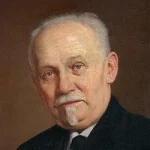
Vuk Karadžić (full name: Vuk Stefanović Karadžić) was a Serbian philologist, linguist, ethnographer and historian, and one of the most important reformers of the Serbian language. He was born on 6 November 1787 in Tršić near Loznica and died in Vienna in 1864. His life’s work includes the reform of the alphabet and orthography, the first dictionary of the vernacular, and extensive collections of folk songs, tales and proverbs.
Thanks to him, the spoken language became the basis of the Serbian literary language, replacing the mixture of Church Slavonic, Russian and Serbian that had previously dominated the written word. Britannica calls him the father of the scholarly study of Serbian folk literature. His collections of songs drew the attention of some of Europe’s most distinguished minds, including Johann Wolfgang von Goethe and Jacob Grimm.
Origins and Childhood in Tršić
Vuk was born in the village of Tršić in the Jadar region, then part of the Ottoman Empire. His father was Stefan Karadžić and his mother was Jegda, née Zrnić. The family originally came from Montenegro, from where they had moved in the mid-18th century.
He received the name Vuk because of a folk belief. Since the earlier children in the family had died, his parents gave the child the name “vuk” (wolf), as it was believed this would drive away witches. Vuk survived and lived to old age.
Early Years and First Literacy
As a child he tended livestock and listened to the stories and songs of his elders. These early experiences probably shaped his later interest in oral creativity. He learned to read and write from his relative Jevta Savić Čotrić, one of the few literate people in the area.
Schooling and First Steps Beyond His Home Region
He continued his schooling at the Tronoša monastery, not far from his native village. At the monastery he gained basic knowledge, but he had to spend most of his time herding livestock. For this reason his father took him back home.
Eager for knowledge, Vuk went to Sremski Karlovci, then the cultural and religious center of the Serbs in the Habsburg Monarchy. There he continued his schooling and met educated people, including the poet Lukijan Mušicki. Later, in Belgrade, he attended the Higher School, where he studied in the atmosphere shaped by Dositej Obradović.
This education was incomplete and often interrupted by wartime circumstances, but it gave him a foundation for later self-study. Throughout his life Vuk continued to learn on his own, often with the help of distinguished advisers.
The First Serbian Uprising and Work as a Scribe
While Vuk was growing up, the First Serbian Uprising against the Ottomans broke out in Serbia in 1804. Literate people were rare at the time, so the young Vuk took work as a scribe for various military commanders. Occasionally he also worked as a teacher.
Among those he wrote for was Hajduk Veljko Petrović, the famous commander in the Negotin region. His experience as a scribe gave him insight into state affairs, military organization and the everyday life of the people. It later served him as a historian and ethnographer.
The Collapse of the Uprising and Departure from Serbia
When the uprising was crushed in 1813, many leaders crossed into Russia. Vuk did not follow Karađorđe but went to Vienna, the capital of the Habsburg Monarchy. That choice determined the rest of his life.
Vienna and the Meeting with Jernej Kopitar
In Vienna, Vuk met Jernej Kopitar, a Slovenian Slavicist and censor of Slavic books. Kopitar immediately recognized his talent and encouraged him to collect folk songs and to write a grammar and a dictionary of the vernacular.
Kopitar was Vuk’s mentor, protector and patron. He introduced him to European linguistic scholarship and pointed him toward the works of German philologists. Vuk remained grateful to his teacher all his life, and their collaboration lasted for years.
Vuk stayed in Vienna until the end of his life, and from there he traveled and corresponded with scholars across Europe.
First Books and the Reform of the Alphabet
As early as 1814, Vuk published two key books: a collection of folk songs and the Pismenica serbskoga jezika (Grammar of the Serbian Language), the first grammar of the Serbian vernacular. In them he set out the basic idea of his reform: to write as one speaks and to read as it is written.
Before him, the written language of the Serbs was Slavonic-Serbian, a language that, as later authors described it, was neither Slavonic nor Serbian. Ordinary people could not understand it. Vuk wanted literacy to become available to everyone.
Six New Letters
He established that the Serbian language has 30 sounds. For six of them the Cyrillic alphabet had no separate letters. He therefore introduced the letters ј, љ, њ, ђ, ћ and џ. At the same time he abolished superfluous letters such as ъ, ь, ы and ѣ, and replaced the letters ю and я with the combinations ју and ја.
Vuk’s work built on the attempts of earlier reformers. The most important of them was Sava Mrkalj, who published a treatise on alphabet reform in 1810. Vuk developed his ideas consistently and put them into practice.
The Principle “Write as You Speak”
The result was an orthography with one letter for each sound. As a result, Serbian orthography is one of the simplest and most logical in Europe. Students learn to write easily, and spelling dilemmas are rare.
The Serbian Dictionary of 1818
In 1818, Vuk published the Serbian Dictionary (Srpski rječnik) with explanations in German and Latin. The first edition had about 26,000 words, and for many entries Vuk added descriptions of folk customs and beliefs. For this reason the dictionary is also a valuable ethnographic source.
The second, expanded edition appeared in 1852 and contained about 47,000 words. To this day it is regarded as a classic of Serbian lexicography.
A short grammar was published together with the dictionary. In this way Vuk laid the foundations of the standard Serbian language, based on the Herzegovinian dialect, which he considered the purest and most regular.
Collecting Folk Songs and Tales
The second major part of Vuk’s work was the collecting of folk creativity. He traveled through Serbia, Bosnia, Croatia and other regions, writing down songs, stories and proverbs directly from the people.
The first collections appeared in 1814 and 1815, and then they grew. Four volumes titled Narodne srpske pjesme (Serbian Folk Songs) were published between 1823 and 1833. The collection later grew to several more books. He also recorded songs he had learned by heart in childhood, and he chose his singers carefully.
Guslars and Singers
Among his most important sources were singers such as Filip Višnjić, a blind guslar from Bosnia, and Tešan Podrugović. Thanks to Vuk, their songs about the Battle of Kosovo, about Marko Kraljević and about the uprising against the dahijas have been preserved.
Tales and Proverbs
Besides songs, Vuk also collected prose. He published a collection of Serbian folk tales, and in the 1830s a large collection of Serbian folk proverbs. Today these books are a basic source for the study of Serbian oral tradition.
Recognition in Europe
Vuk’s collections of songs aroused great interest in Europe. Jacob Grimm, one of the best-known German philologists, translated Vuk’s grammar into German and championed his work. Goethe wrote favorably about Serbian folk songs.
The historian Leopold von Ranke used Vuk as the main source for his work on the Serbian Revolution, published in 1829. Vuk was also well known in Russian and Ukrainian intellectual circles. According to encyclopedia entries, his works inspired Ukrainian writers as well, including Taras Shevchenko.
According to a French encyclopedia, the songs of the Serbian people were also admired by Karl Marx and Friedrich Engels. In 1819, Vuk visited Russia and Kyiv, where he met local cultural figures.
Travels and Friendship with Njegoš
Vuk did not remain confined to Vienna. He traveled to Serbia several times, and he also visited Montenegro. There he met Prince-Bishop Petar II Petrović Njegoš, a poet and ruler, with whom he remained on friendly terms.
The fruit of his Montenegrin travels was a book on Montenegro and the Montenegrins, published in German in 1837. In it he described the history, customs and life of the Montenegrin people, and so presented them to a European readership.
The Struggle for the Vernacular
Vuk’s reform was not accepted without resistance. Church authorities and part of the educated Serbs, among them Metropolitan Stefan Stratimirović, defended the old Slavonic-Serbian language. For them, the vernacular was “coarse” and unworthy of literature.
One of the fiercest opponents was Jovan Hadžić, who proposed different orthographic solutions. Vuk remained consistent. The Austrian censorship and the authorities in Serbia occasionally made it harder for his books to circulate.
The decisive battle was fought in 1847, when works appeared that turned public opinion. Đuro Daničić, Vuk’s collaborator and successor, published the treatise “Rat za srpski jezik i pravopis” (The War for the Serbian Language and Orthography), and Vuk issued his translation of the New Testament. It was a symbolic victory for the vernacular, since even a sacred text appeared in the language the people actually speak.
The Vienna Literary Agreement
Vuk’s idea that Serbs and Croats speak the same language led, in 1850, to an important meeting in Vienna. Vuk then signed the Vienna Literary Agreement with Croatian cultural representatives, among them Ivan Mažuranić. The agreement envisaged a common literary language based on the Štokavian dialect.
This document later became the basis for the development of the Serbo-Croatian language. Its significance is still interpreted differently today, but it remains an important point in the history of the South Slavic languages.
Final Years and Death
Vuk spent the last decades of his life in Vienna, mostly working on additions to his works and corresponding with collaborators. His work was not fully recognized in his homeland while he was alive.
He died in Vienna in 1864, at the age of 76. The date of his death differs among sources: most give 7 February, while some mention 6 February. He was buried in Vienna.
Four years after his death, in 1868, Serbia officially adopted Vuk’s orthography. His remains were transferred to Belgrade in 1897 in a solemn ceremony at the expense of the Serbian government. He was buried in the churchyard of the Cathedral Church, next to Dositej Obradović.
Private Life
In 1818, in Vienna, Vuk married Anna Maria Kraus. The marriage lasted until his death. The family lived in Vienna, where Vuk worked and received numerous guests and collaborators.
His daughter Mina Karadžić is well known; she later gained a reputation as a painter and translator. Mina was close to her father and supported his work.
Vuk was a modest man, wholly devoted to his work. He spent most of his life far from his homeland, but he maintained his bond with the people through songs, stories and correspondence.
Interesting Facts
- A name from folk belief: He was given the name Vuk as protection against witches, because his earlier siblings had died.
- He walked with a limp: Because of a leg ailment, he limped all his life.
- Two birth dates: He was born on 26 October by the old calendar, or 6 November by the new one, so his birthday is marked according to both dates.
- Orthography after death: His orthography was officially adopted in Serbia only four years after his death.
- An author in two worlds: He wrote in both Serbian and German, which allowed him to present his work to a European audience.
- The first grammar: Jacob Grimm later translated his 1814 grammar into German.
Awards and Recognition
During his lifetime, Vuk earned the respect of European scholars. He received recognition from distinguished scholarly institutions, and the University of Jena awarded him an honorary doctorate.
After his death, his name has been given to a number of institutions and events. Every year the Vuk’s Assembly (Vukov sabor) is held in Tršić, and the Vuk Award is among the most prestigious cultural honors in Serbia. In Belgrade there is the Museum of Vuk and Dositej, dedicated to the two great enlighteners.
Britannica describes him as the father of the scholarship of Serbian folk literature, which remains the most frequently cited assessment of his work.
Legacy and Influence
Vuk’s legacy can be seen in every Serbian text that is written and read. The alphabet he arranged and the orthography he established are still the basis of the Serbian language today. His dictionary and grammar laid the foundations for the further development of linguistics.
As a collector of folk heritage, he saved a large part of oral literature from oblivion. Without his records, the songs about Kosovo, about the hajduks and about the uprising might never have been preserved in this form.
His influence crossed borders. A French encyclopedia describes him as the father of literature in Serbo-Croatian and the founder of Serbian Romanticism. Many Slavic writers and scholars in the 19th century used his work as a model.
Biography – Frequently Asked Questions
Who was Vuk Karadžić?
Vuk Stefanović Karadžić was a Serbian philologist, linguist and ethnographer, and a reformer of the Serbian language and orthography. He collected and published folk songs, tales and proverbs and compiled the first dictionary of the vernacular.
When and where was Vuk Karadžić born?
He was born on 6 November 1787 (26 October by the old calendar) in the village of Tršić near Loznica, in what was then the Ottoman Empire and is today Serbia.
What is Vuk Karadžić best known for?
He is best known for his reform of the Serbian language, alphabet and orthography, for the Serbian Dictionary, and for his collections of folk songs, which made him famous beyond Serbia.
What did Vuk Karadžić do for the Serbian language?
He introduced the spoken language into literature, wrote the first grammar and dictionary of that language, added six new letters to the alphabet, and introduced the principle “write as you speak.”
When did Vuk Karadžić die and where is he buried?
He died in Vienna in 1864 (sources give 7 or 6 February). His remains were transferred to Belgrade in 1897, where he was buried in the churchyard of the Cathedral Church.
Who was Vuk’s mentor?
His mentor was the Slovenian Slavicist Jernej Kopitar, who encouraged him in Vienna to collect songs and to write a grammar and a dictionary.
What are Vuk’s most important books?
The most important are the Pismenica serbskoga jezika (1814), the Serbian Dictionary (1818, expanded edition 1852), the collection Narodne srpske pjesme, the collections of folk tales and proverbs, and the translation of the New Testament (1847).
When was Vuk’s alphabet officially adopted?
Serbia officially adopted Vuk’s orthography in 1868, four years after his death.
Did Vuk Karadžić have a family?
Yes. In 1818 he married Anna Maria Kraus. Their daughter Mina Karadžić, a painter and translator, is well known.
Conclusion
Vuk Karadžić rose from a village boy in Tršić to become one of the most important figures in the history of Serbian culture. Through his work on the alphabet, grammar and dictionary he laid the foundations of the modern Serbian literary language, and by collecting folk songs, tales and proverbs he preserved a great treasury of oral heritage. Despite the opposition of the church and conservative writers, he remained faithful to his idea that language should belong to the people. His legacy lives on in every Serbian letter written today.
Related biographies
Report this biography
If you noticed an error, inappropriate content, or have another reason to report this page, fill in the form below.