
Known for
Lidija Vukićević is best known for her role as Violeta "Viki" Popadić in the cult series "A Better Life," as well as for roles in the films "Žikina dinastija," "Lutalica" and "Vampiri su među nama," her role as Mileva Tankosić in the series "Igra sudbine," and her term as a member of parliament for the Serbian Radical Party.
Who is Lidija Vukićević
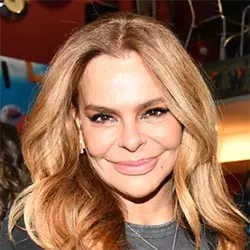
Lidija Vukićević is a Serbian actress who has been one of the most recognizable faces of the country's film, television and theater scene since the mid-1980s. She was born on July 20, 1962, in Kraljevo, and has spent most of her professional and personal life in Belgrade. Audiences remember her best for her role as Violeta, better known as Viki Popadić, in the cult series "A Better Life" (Bolji život), a role that made her one of the most famous actresses in Yugoslavia almost overnight.
Besides acting, Lidija Vukićević is also known for her political engagement — she served as a member of parliament for the Serbian Radical Party in the National Assembly of the Republic of Serbia from 2007 to 2012. Her career, which now spans more than four decades, includes dozens of film and television roles, and she has remained active in recent years as well, including through her role as Mileva Tankosić in the series "Igra sudbine."
Early life and childhood
Lidija Vukićević was born on July 20, 1962, in Kraljevo, then part of the Socialist Federal Republic of Yugoslavia. According to available information, her family origins are linked to the Montenegrin clan of Vasojevići. She grew up in a household where her mother worked as a literature teacher, described as the stricter parent, while her father, according to the actress herself, was more lenient. She grew up alongside her sister Marina, sharing a childhood marked by strict upbringing but also by a love of books and the arts that their mother instilled in the family home.
Lidija Vukićević's interest in acting developed in a somewhat unexpected way. According to her own later accounts, her original ambition was to become a clinical psychologist, and after finishing high school she initially enrolled in psychology studies. She came to the Faculty of Dramatic Arts, as she explained, to accompany a high school friend who was taking the entrance exam for acting. While waiting and "standing guard" for her friend, she decided to try the entrance exam herself — and was accepted, while her friend did not pass the selection process.
Education
Lidija Vukićević graduated in acting from the Faculty of Dramatic Arts (FDU) in Belgrade. According to her own account, around 500 candidates applied the year she competed for a place, of whom fourteen made it to the narrower selection round, and ultimately seven students were admitted to the class. She studied under a professor of acting referred to in sources as Milenko Maričić. She simultaneously attempted to study psychology, but, as she explained, the demanding schedule of the academy, which lasted from morning until evening, made this impossible, so she devoted herself entirely to acting.
Beginning of her career
Lidija Vukićević's first professional roles came during her studies and shortly after graduation, in the mid-1980s. She made her debut in 1983 as Mira in the film "Kako sam sistematski uništen od idiota," directed by Slobodan Šijan, in which the lead role was played by Danilo Bata Stojković. That same decade she also appeared in works such as "Ne tako davno" and "Andrić i Goja" (1984), building experience in front of the camera before landing the roles that would bring her wider recognition.
A turning point in her career came in 1985 with the role of the seductive housemaid Lilika in the film "Žikina dinastija," directed by Zoran Čalić, the seventh installment of the popular film series "Lude godine." The actress was 22 years old at the time, and the role brought her notable media attention and opened the door to further collaboration with the same director. That same year she also appeared in the film "Indijsko ogledalo" as Izabela, while in 1986 she played Soja in the film "Razvod na određeno vreme," alongside Velimir "Bata" Živojinović, one of the most famous Yugoslav actors of the period.
Rise to popularity
Lidija Vukićević's greatest popularity came from her role as Violeta, nicknamed "Viki" Popadić, the daughter in the central family of the series "A Better Life" (Bolji život), which began airing in 1987 and became one of the most-watched Yugoslav series of its time. Her portrayal of the young, charming but also vulnerable heroine won over audiences across the former Yugoslavia and turned the actress into a genuine television star. Thanks to this role, Lidija Vukićević and her colleague Aljoša Vučković received the award for best acting couple of the year, chosen by readers of the magazine "TV Novosti," presented at the Film Encounters festival in Niš.
Alongside her work on the series, she continued her collaboration with director Zoran Čalić on films of a similar genre. In the film "Lutalica" (1987) she played the lead role — Lepa Rada, a young Roma woman who comes to Belgrade hoping to become a singer. This was followed by roles in the films "Špijun na štiklama" (1988), in which she played Maja, and "Vampiri su među nama" (1989), in which she portrayed Andrijana, the second installment of Čalić's "Ćao, inspektore" series. During this period she also appeared in the film "Sever i jug" (1988) as Virdžinija, as well as in the Italian-Yugoslav co-production "Il colpo" (1989).
Greatest achievements
The 1980s and 1990s remain the period of Lidija Vukićević's most intense film and television activity. After the completion of the first season of "A Better Life," she continued playing Violeta Popadić in the sequel series, "Bolji život 2" (1990–1991), further cementing her status as one of the most famous actresses of her generation. In 1990 she appeared in the film "Ljubav je hleb sa devet kora," and in 1996 she played Marica in the film "Doviđenja u Čikagu," once again collaborating with director Zoran Čalić. In 1999 she appeared in the film "Nek' bude što bude."
Following a break that coincided with her period of political engagement, the actress returned to film and television projects in 2002 with the role of the singer Sarka Zvečarka in the series "Hotel sa 7 zvezdica." A more intensive phase of her career began in the mid-2010s: in 2016 she played the character Micka in the series "Nemoj da zvocaš," in 2017 she appeared in the series "Sinđelići" and in the film "Afterparti," where she played the lead character's mother, and in 2018 she appeared in the series "Šifra Despot" as the florist Slađa and in the popular domestic series "Urgentni centar."
A particularly notable place in the more recent phase of her career belongs to the role of Mileva, known as Milevica Tankosić, in the long-running series "Igra sudbine," which she played from 2020 to 2025. This role brought the actress a new, younger audience and further reinforced her presence on television screens after more than three decades of career. In 2025 she also appeared as Aleksandra in the series "Dadilja sa sela," confirming that she remains professionally active in her seventh decade of life. Besides film and television, she occasionally performs on stage as well, including in the one-woman play "Istina," which she performs together with her colleague Jelica Sretenović.
Political career
A distinct chapter in Lidija Vukićević's life is her involvement in politics. In 2004 she joined the Serbian Radical Party and over time became one of its more recognizable members. In the 2007 parliamentary elections she was elected as a member of parliament in the National Assembly of the Republic of Serbia, where she also served as deputy chair of the Committee on Culture and Information.
She held her parliamentary mandate until 2012, when the Assembly was dissolved and the Serbian Radical Party failed to cross the electoral threshold in that year's parliamentary elections. Shortly afterward, in May 2012, Lidija Vukićević left the party, citing disagreements with Vjerica Radeta, one of the leading figures of the SRS at the time, as the reason. After leaving active politics, the actress returned to focus on her acting career.
Private life
In 1991, Lidija Vukićević married Mitar Mrkela, a former Yugoslav footballer and national team player. The couple had two sons — Andrej, born in 1992, and David, born three years later. The older son, like his father, pursued a career in football, while the younger one, according to the actress, wanted to become a pilot. Due to her husband's engagements with foreign football clubs, the family lived for a time in the United States, Turkey and the Netherlands, and through her husband's career she visited destinations such as Babylon, Jordan, Mecca and Baghdad. Her marriage to Mitar Mrkela lasted until 2000, when the couple divorced, and their sons remained living with their mother.
After the divorce, Lidija Vukićević stated that she did not enter into any serious relationships for many years, as she wanted to devote herself fully to raising her sons. At one point, the media linked her romantically to General Nebojša Pavković, which the actress denied, stating that they were simply friends. Later, according to media reports, she was in a relationship with a military pilot named Stanko, whom, as she noted, her sons accepted well. In more recent interviews, including ones from 2024, the actress confirmed that she is in a long-term relationship with a younger partner whose identity she has not publicly disclosed, adding that for her, age is not what matters in a relationship, but rather the maturity and character of the person.
Lidija Vukićević is also known as a great animal lover. According to her own account, she found an injured dog in front of the building where she lived, named him Žuća, and adopted him, and her wish for the dog to have a yard was one of the reasons the family later moved into a house. In that house, she said, she chose the furniture herself and arranged the space according to her own wishes, including a fountain and a fireplace. Among her favorite books, she has mentioned "The Rise and Fall of Ikarus Gubelkian" (Uspenje i sunovrat Ikara Gubelkijana) by Borislav Pekić and the "Diary" of André Gide, while she has named Audrey Hepburn as her favorite actress.
Interesting facts
- She played the role of Lilika in the film "Žikina dinastija" at just 22 years old, a role that made her a recognizable face in Yugoslav cinema almost overnight.
- She enrolled at the Faculty of Dramatic Arts, according to her own account, by accompanying a friend to the entrance exam, and in the end she was the only one of the two to be admitted.
- During one of her early film projects, made alongside Bata Živojinović, she refused to perform a scene she considered inappropriate, which, as she later explained, cost her part of the role.
- According to some sources, her family originates from the Montenegrin clan of Vasojevići.
- She has more than 260,000 followers on Instagram, making her one of the most followed actresses of her generation on the platform.
- Despite decades in the public eye, she rarely discusses details of her current private life, and usually only in general terms.
Awards and recognition
Thanks to her role in the series "A Better Life," Lidija Vukićević, together with her colleague Aljoša Vučković, received the award for best acting couple of the year, chosen by readers of the magazine "TV Novosti," at the Film Encounters festival in Niš in 1988. According to some sources, she has also been named one of the most beautiful actresses on the Serbian scene on several occasions during her career, though such recognitions belong to the category of media polls rather than official professional awards. Her presence has also been noted at the ceremony for the Vidovdan Decorations, where she received recognition alongside other public figures from the world of culture and entertainment.
Legacy and influence
Lidija Vukićević belongs to a generation of actors whose roles from the 1980s remain part of the collective memory of Yugoslav popular culture. The series "A Better Life" and the character of Violeta Popadić have remained synonymous with a particular period of domestic television, while films such as "Žikina dinastija" and "Lutalica" continue to feature in analyses of Yugoslav comedy and popular film of the era. Her willingness to win over audiences again after a decades-long break in her film and television career, this time through the role of Milevica Tankosić in the series "Igra sudbine," demonstrates the continuity of her influence and her ability to remain relevant to younger generations of viewers as well. Her presence in politics, though limited in time to the period between 2004 and 2012, further shaped her public persona, making her one of the few actresses of her generation to have also had an active parliamentary career.
Biography – Frequently Asked Questions
Who is Lidija Vukićević?
Lidija Vukićević is a Serbian actress, born in 1962 in Kraljevo, best known for her role as Violeta "Viki" Popadić in the series "A Better Life." She also served as a member of parliament for the Serbian Radical Party from 2007 to 2012.
When was Lidija Vukićević born?
Lidija Vukićević was born on July 20, 1962.
Where was Lidija Vukićević born?
She was born in Kraljevo, in the then Socialist Federal Republic of Yugoslavia, in what is now Serbia.
What is Lidija Vukićević best known for?
She is best known for her role as Violeta Popadić in the series "A Better Life," as well as for her roles in the films "Žikina dinastija," "Lutalica" and "Vampiri su među nama." More recently, she has also become known for her role as Milevica Tankosić in the series "Igra sudbine."
Was Lidija Vukićević married?
Yes, she was married to former footballer Mitar Mrkela from 1991 to 2000, when they divorced.
How many children does Lidija Vukićević have?
She has two sons, Andrej and David, born during her marriage to Mitar Mrkela.
Was Lidija Vukićević involved in politics?
Yes, she was a member of the Serbian Radical Party from 2004 to 2012 and a member of parliament in the National Assembly of Serbia from 2007 to 2012.
Where did Lidija Vukićević study acting?
She graduated in acting from the Faculty of Dramatic Arts in Belgrade.
What series and films has Lidija Vukićević appeared in?
Her roles include the series "A Better Life," the films "Žikina dinastija," "Lutalica," "Špijun na štiklama" and "Vampiri su među nama," as well as the more recent series "Urgentni centar" and "Igra sudbine."
How tall is Lidija Vukićević?
According to available information, she is 175 centimeters tall.
Is Lidija Vukićević still active as an actress today?
Yes, she has remained professionally active in recent years as well, including through her role in the series "Igra sudbine" (2020–2025) and the series "Dadilja sa sela" (2025).
Conclusion
Lidija Vukićević is one of the most recognizable actresses of Serbian and former Yugoslav popular culture. From the role of the seductive housemaid in "Žikina dinastija," through her long-running portrayal of Violeta Popadić in "A Better Life," to her return to television screens in "Igra sudbine," her career spans more than four decades. Alongside acting, her life has also been marked by marriage and motherhood, as well as a distinct period of active political engagement within the Serbian Radical Party. Although she rarely discusses the details of her private life, Lidija Vukićević remains one of the most enduring public figures from the territory of the former Yugoslavia, whose roles continue to be part of the audience's collective memory.
Related biographies



Report this biography
If you noticed an error, inappropriate content, or have another reason to report this page, fill in the form below.