
Known for
Mirko Babić is best known for the role of Dragojlo in the cult domestic series Selo gori, a baba se češlja, as well as for his long theatre career at the Knjaževsko-srpski Theatre in Kragujevac, where he played King Lear and Ivan Karamazov.
9 min read
Who is Mirko Babić
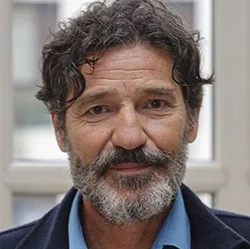
Mirko Babić was a Serbian theatre, film, and television actor, one of the most recognizable acting names in Kragujevac in the second half of the twentieth and early twenty-first century. Although he achieved his greatest popularity with the wider public through the role of Dragojlo in the series Selo gori, a baba se češlja ("The Village Is Burning and Grandma Is Combing Her Hair"), his artistic body of work is far broader, encompassing numerous theatre, film, and television roles created over a career spanning more than four decades.Mirko Babić was the leading dramatic actor of the Knjaževsko-srpski Theatre in Kragujevac, the oldest theatre in Serbia, where he spent most of his professional life. He is best known to the wider public for the role of Dragojlo in Radoš Bajić's series Selo gori, a baba se češlja, while in theatre circles he was esteemed as an actor of serious dramatic expression, known for his roles in the works of William Shakespeare, Fyodor Dostoevsky, and Branislav Nušić. Over the course of his career, he delivered more than a hundred roles in theatre, film, and television, and served two terms as director of the Knjaževsko-srpski Theatre.Early Life and Childhood
Mirko Babić was born on March 14, 1948, in Kragujevac. There is no extensively available public information about his childhood and family background, so this period of his life cannot be reconstructed in greater detail from reliable sources. What is known is that his personal and professional path was closely tied to his hometown from an early age, where he spent practically his entire career.Education
Mirko Babić received his acting education at the Academy of Theatre, Film, Radio and Television in Belgrade (an institution operating today under the name Faculty of Dramatic Arts). He graduated in 1973, in the class of the respected Professor Milenko Maričić. Interestingly, Babić actually began his professional acting career even before officially graduating — in 1972, he became a member of the ensemble of the Knjaževsko-srpski Theatre in Kragujevac, a year before earning his degree.Beginning of His Career
After finishing the academy, Mirko Babić, unlike many of his colleagues who built their careers on Belgrade stages, decided to tie himself professionally to the theatre in his hometown. In 1972, he became a permanent member of the ensemble of what was then the "Joakim Vujić" Theatre, today's Knjaževsko-srpski Theatre. That decision marked the whole of his subsequent professional path — instead of the capital's stages, he chose the Kragujevac theatre, to which he remained loyal for more than four decades to come.Alongside his theatre engagement, Babić also turned to film early on. Some of his first film roles date to the early 1970s — he appeared in the film Zvezde su oči ratnika and the television film Mileva Ajnštajn, both from 1972, as well as in the 1973 film Mirko i Slavko, in which he played a partisan.Rise to Fame
Through the 1970s and 1980s, Mirko Babić delivered a number of notable film and television performances. He appeared in works such as Crvena zemlja (1975), Stići pre svitanja (1978), Poslednja trka (1979), and Snovi, život, smrt Filipa Filipovića (1980). In the 1981 film Kraljevski voz, he played the stationmaster Pantić, and that same year he also appeared in the television film Čovek koji je pojeo vuka.In the mid-1980s, he continued building his filmography through roles in works such as Timočka buna (1983), in which he played the character Milisav, known as "Golja," the short film Pereat (1983), the television film Dr (1984), in which he played Dr. Milorad Cvijović, as well as in Crvena baraka (1985), Protestni album (1986), and Waitapu (1987). Although he was consistently present on both small and big screens, Babić remained, throughout this period, above all a theatre actor, dedicated to his work at the Knjaževsko-srpski Theatre.Greatest Successes
Mirko Babić's theatre career was marked by numerous significant roles. He played the title role in Shakespeare's King Lear, then Ivan Karamazov in the stage adaptation of Fyodor Dostoevsky's The Brothers Karamazov, as well as Čeda in Nušić's comedy Mrs. Minister. He also made an impression playing Henry Higgins in Shaw's Pygmalion, as well as in the productions The Lower Depths, Kamen za pod glavu, Carstvo mraka, Laža i paralaža, Sveti Georgije ubiva aždahu, and Golubnjača.A particular curiosity of his career is the one-man show Kad su cvetale tikve, based on Dragoslav Mihailović's work, which he performed for as long as thirty years, staging it more than a thousand times. For this production he received a double Golden Medal at the Festival of Monodrama and Pantomime in Zemun, winning both the professional jury's award and the audience award.Still, Mirko Babić achieved his greatest popularity with the wider television audience only in the later years of his career, through the role of Dragojlo in Radoš Bajić's series Selo gori, a baba se češlja, one of the most-watched domestic television series of recent decades. In it, he played the lead character's neighbor, with whom he shared numerous ups and downs of village life, and his line "Mislim, nemoj da se ljutiš" has remained a fixture of domestic popular culture.Private Life
Publicly available sources do not contain detailed, reliably confirmed information about Mirko Babić's private life, such as details of a marriage, children, or family life. Out of respect for his privacy and in keeping with the availability of verified information, this information is not presented here. What is publicly known is that Babić lived and worked in Kragujevac for decades, a city to which he was deeply attached both professionally and personally.According to media reports, in his final years Babić faced a serious illness — throat cancer, which, according to some sources, he battled over an extended period before his death. Mirko Babić died on November 12, 2020, in Kragujevac, at the age of 72. Following his death, a funeral was held in Kragujevac, attended by colleagues, friends, and representatives of the Knjaževsko-srpski Theatre. His longtime colleague, actor Aljoša Vučković, stated on the occasion that every encounter with Babić had been sincere and full of emotion.Trivia
Babić began his career at the Knjaževsko-srpski Theatre a year before officially graduating in acting. He performed the one-man show Kad su cvetale tikve for three decades, more than a thousand times. He served two terms as director of the Knjaževsko-srpski Theatre, appointed to the position on October 8, 2011. He marked the end of his forty-five-year acting career with his colleagues on June 17, 2017. Although best known for his role in Selo gori, a baba se češlja, over the course of his career he delivered more than a hundred roles in theatre, film, and television.Awards and Recognition
Over the course of his career, Mirko Babić received around twenty national and international acting honors. Among the most significant are:Best Actor award for the role of King Lear in the production of the same name The "Joakim Vujić" statuette for an outstanding contribution to the development of theatrical art in Serbia, awarded by the Knjaževsko-srpski Theatre (2009) The Order of St. Sava, Second Class, awarded by the Serbian Orthodox Church (2013) The Silver Medal for Merit, awarded by the President of the Republic of Serbia (2017) The "Distinguished Citizen of the City of Kragujevac" recognition (2018) A double Golden Medal (jury award and audience award) at the Festival of Monodrama and Pantomime in Zemun, for the one-man show Kad su cvetale tikve Annual awards of the "Joakim Vujić" Theatre and the Knjaževsko-srpski TheatreLegacy and Influence
Mirko Babić is regarded as one of the most important artists of Kragujevac in the second half of the twentieth and early twenty-first century. He devoted more than four decades to working at the Knjaževsko-srpski Theatre, the oldest theatre in Serbia, making a significant contribution to preserving and developing the theatrical tradition of the city. His work as theatre director further shaped the institution's work during the periods he held that position.Through the role of Dragojlo in the series Selo gori, a baba se češlja, created by Radoš Bajić, he has remained permanently remembered in Serbian popular culture, and this role continues to draw viewers during the series' numerous reruns on Radio Television Serbia. At the same time, his theatrical body of work, including roles in classic dramatic works, attests to the breadth of his acting talent, which extended well beyond his television popularity.Biography — Frequently Asked Questions
When was Mirko Babić born? Mirko Babić was born on March 14, 1948, in Kragujevac.When and where did Mirko Babić die? He died on November 12, 2020, in Kragujevac, where he was also buried.What did Mirko Babić die of? According to media reports, in his final years he suffered from throat cancer.What is Mirko Babić best known for? He is best known for the role of Dragojlo in Radoš Bajić's series Selo gori, a baba se češlja.Where did Mirko Babić receive his acting education? He graduated from the Academy of Theatre, Film, Radio and Television in Belgrade in 1973, in the class of Professor Milenko Maričić.Which theatre did Mirko Babić work at during his career? He spent most of his career at the Knjaževsko-srpski Theatre in Kragujevac, of which he was also director on two occasions.What are Mirko Babić's most significant theatre roles? Among his most significant roles are King Lear, Ivan Karamazov in The Brothers Karamazov, and Čeda in Mrs. Minister.What awards did Mirko Babić receive? Among others, he received the "Joakim Vujić" statuette, the Order of St. Sava, and the Silver Medal for Merit.Did Mirko Babić act in films, besides theatre? Yes, he delivered numerous film and television roles, among others in Vruć vetar, Kraljevski voz, and Timočka buna.How long did Mirko Babić's acting career last? His acting career lasted around 45 years, and he officially marked its end with his colleagues on June 17, 2017.Conclusion
Mirko Babić is remembered as one of the most important actors of Kragujevac and of Serbian theatre in general. Born in 1948 in Kragujevac, he devoted his career to the Knjaževsko-srpski Theatre, where he spent more than four decades and delivered numerous notable theatre roles, from King Lear to Ivan Karamazov. Although theatre was his primary artistic calling, he is best known to the wider public for the role of Dragojlo in the series Selo gori, a baba se češlja. He died on November 12, 2020, in his hometown, leaving behind a rich artistic body of work and a lasting place in the history of Serbian theatre.Related biographies


Last updated: August 24, 2026
Report this biography
If you noticed an error, inappropriate content, or have another reason to report this page, fill in the form below.